Maroon Bells Traverse Colorado 14er Hike Guide
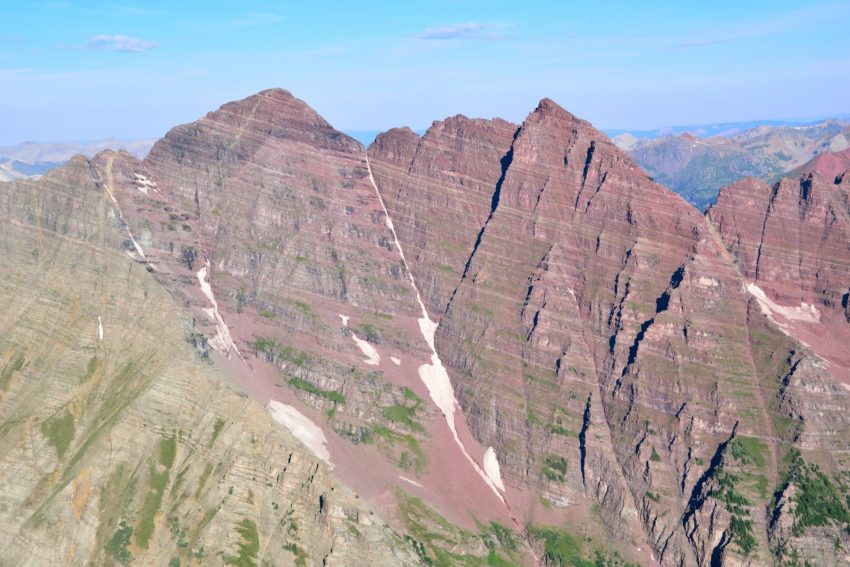
The Maroon Bells Traverse is one of four great Colorado 14er traverses according to legendary mountaineer, Gerry Roach. This class 5 route is considered one of the most difficult 14er traverses in Colorado as it links Maroon Peak and North Maroon Peak via a technically difficult, highly exposed ridgeline. The Maroon Bells Traverse is located in the Elk Mountains outside of Aspen which are notorious for their poor trail conditions and loose rock and starts at the Maroon Lake trailhead which does require a permit. This traverse is a serious undertaking with a difficult hike up Maroon Peak, sustained class 3-5 moves to traverse to North Maroon and a class 4 downclimb to start the descent. This route should only be attempted by well seasoned hikers with experience on similar scrambles and in a perfect weather window. The “deadly bells” have claimed many lives over the years but this guide will help you prepare for a single or multiday trip up two of Colorado’s most difficult 14ers.
Maroon Bells Traverse Quick Facts
| Category | Details |
| Hike Rating | ★★★★ (4/5) |
| Area | Elk Mountains, Colorado |
| Trailhead | Maroon Lake |
| Distance | 11 Miles Total |
| Route Type | Lollipop Loop |
| Elevation Start | 9,586ft |
| Highest Elevation | 14,163ft – Maroon Peak 14,022ft – North Maroon Peak |
| Total Elevation Gain | 5,500ft |
| Estimated Time to Complete | 12-13 Hours |
| Difficulty | Strenuous –What does this mean? |
| YDS Class | Class 5 –What does this mean? |
| Exposure | High |
| Best Season | July – September |
| Activity Type | Hiking, Scrambling, Trail Running |
| Crowds | Low |
| Dogs Allowed | No |
| Permit/Fee | Yes |
| Last Hiked Date | 7.13.18 |
Maroon Bells Traverse Virtual Trail Guide
This Maroon Bells Traverse virtual guide was shot many years ago before permits and camping regulations changed. However, this guide will show you the hike up Maroon Peak, difficulties and exposure of the traverse and downclimb of North Maroon Peak.
Maroon Bells Traverse Map & GPX
The map below shows the route that I followed for this hike. GPX files are available through a suggested donation of $3-$5. Creating and maintaining hiking guides, videos and GPX files takes a tremendous amount of time. Your support helps keep The Virtual sherpa running, covers website hosting costs and allows me to continue creating free hiking content.
After making a donation, click the button below to send me an email with the hike name in the subject line. I’ll send the GPX file as soon as possible.
Maroon Bells Traverse Directions & Parking
Protected Area Type: Wilderness Area
Protected Area Name: Maroon Bells-Snowmass Wilderness
Trailhead: Maroon Lake, Maroon Lake Shuttle
Coordinates: 39.098542649, -106.940785095
Driving Directions: Assuming you have a parking permit, from the roundabout in Aspen, follow Maroon Creek Road until you reach the entrance station of the park. Continue up to the well marked trailhead and parking area for Crater & Maroon Lakes. This entire route is paved and all vehicles can drive it. If you have a shuttle reservation, take the roundabout in Aspen towards Crater Lake and then follow the well marked signs to a parking area.
Parking: As of 2026, a parking permit is required for both an overnight and day Pyramid Peak hike. Read more about that entire process here.
Permits or Reservation/Fee Description: As of 2027, reservations are required to park at the Pyramid Peak trailhead May 15th through the end of October. This is the same time the road to Crater Lake is usually open. There is a fee to park at the trailhead and a fee to take the shuttle to the trailhead. There are also special timed permits that can also play a factor into your reservation. Read more about the entire process here.
Maroon Bells Traverse Trail Overview
Approach
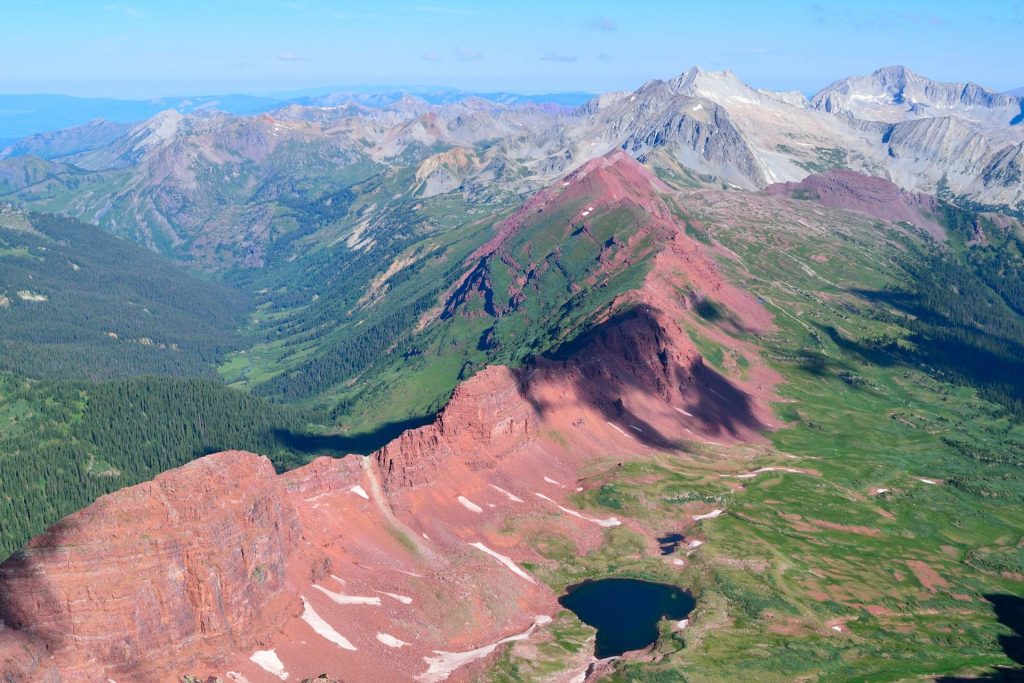
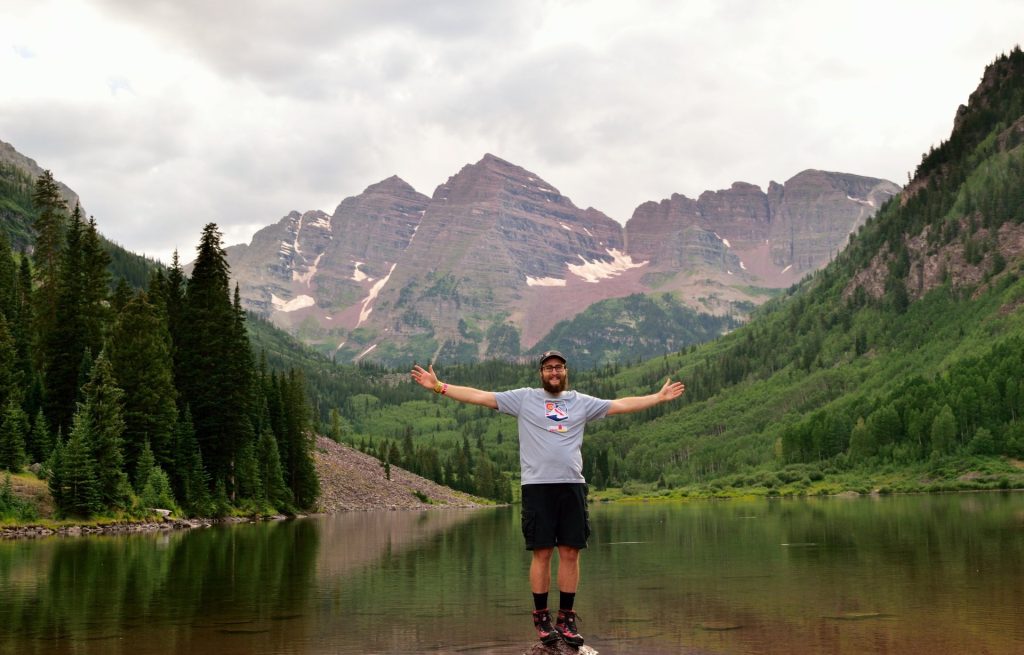
The Maroon Bells Traverse begins at Maroon Lake. Walk past the lake and follow the trail up to Crater Lake, at 1.75 miles reach a signed trail junction and turn left on the West Maroon Creek trail. Hike around the lake for about a half mie and around 10,400ft reach a cairn to start the hike up Maroon Peak. The next part of the trail is extremely steep and in sections hard to follow. Gain 2,800ft on the way up to Maroon Peaks’ south ridge. From here, the remainder of the route up Maroon Peak can be seen.
Continue scrambling up class 2 terrain between two towers, up a crack and eventually reaching slightly easier terrain above 13,400ft. Cross over the loose terrain, traveling carefully across the talus and find two obvious gullies. Pick one to scamper up and about halfway up, follow cairns to continue west, across the gully. Don’t climb all the way up or you will have to downclimb. The remaining route up Maroon Peak involves class 3 terrain, crossing several cliffbands that can be very exposed and working up a few more gullies. This section is extremely loose, steep and requires careful route finding. Eventually reach the summit of Maroon Peak, your first achievement of the Maroon Bells Traverse.
The Traverse
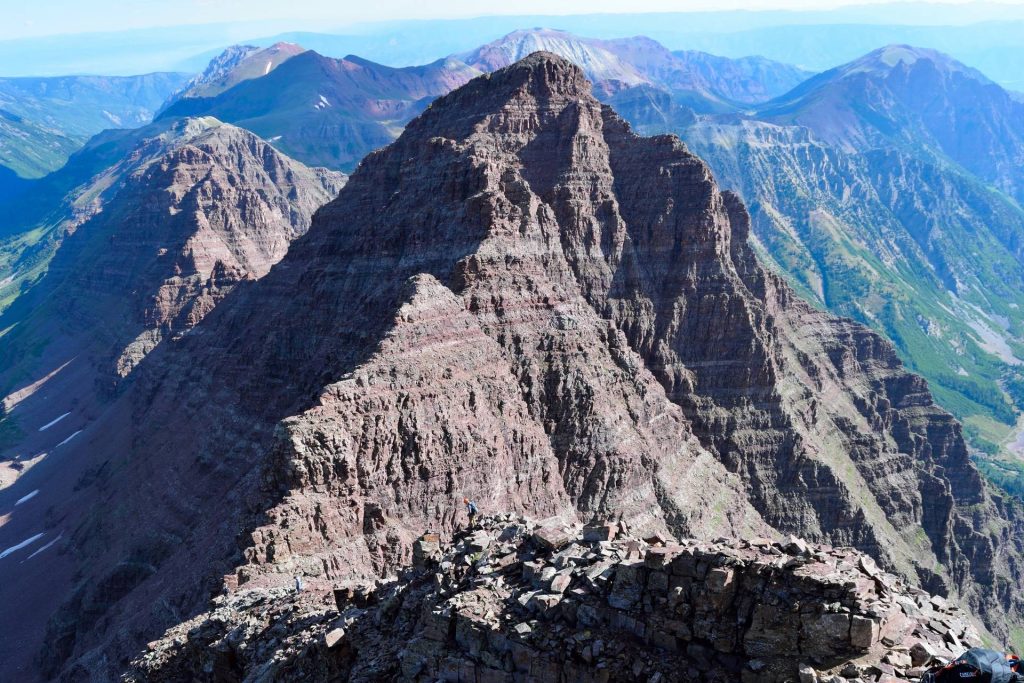
Although the Maroon Bells Traverse is less than a half mile long, expect it to take a few hours to cross. From the summit of Maroon Peak, descend west (left) down some cliffbands to eventually reach a steep gully. Once down the gully, continue north (right) down class 3 terrain to reach the top of the striking bell cord, a couloir that separates Maroon Peak and North Maroon Peak. This is the start of the true difficulties of the Maroon Bells Traverse as there is mostly class 3 and 4 terrain ahead with a few class 5 moves as well.
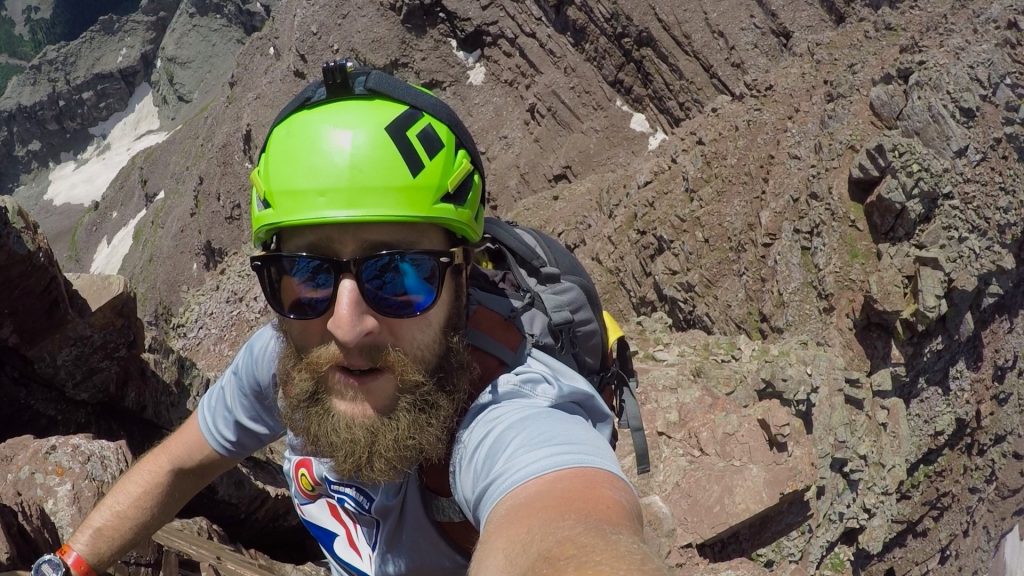
Next up is the first of three main obstacles on the traverse, a 40ft class 4 cliff. Most hikers skirt around to the west, left and find a crack that leads them up half way then turn back right to scramble up the final 20ft on heavily exposed class 4 terrain. From here, the route gets narrow and heavily exposed on both sides and the second obstacle is in view, another 35-40ft cliff to ascend. Pick a line that feels best for you and scramble up the extremely exposed class 4 or low 5 terrain depending on your line.
Once on top of this section, continue along for the final of the main difficulties on the Maroon Bells Traverse a 15-20ft cliff. There are two options here, both are low class 5. Left leads to a more protected chimney that involves an awkward reach to get through the crux. The right is MUCH more exposed but slightly less difficult whereas the left feels slightly more protected but has harder climbing. Most go left but pick what feels best for you. From the top of this section, continue on a narrow ridge with a small “leap of faith” and more class 3 and 4 terrain to get to the top of North Maroon Peak.
The Descent
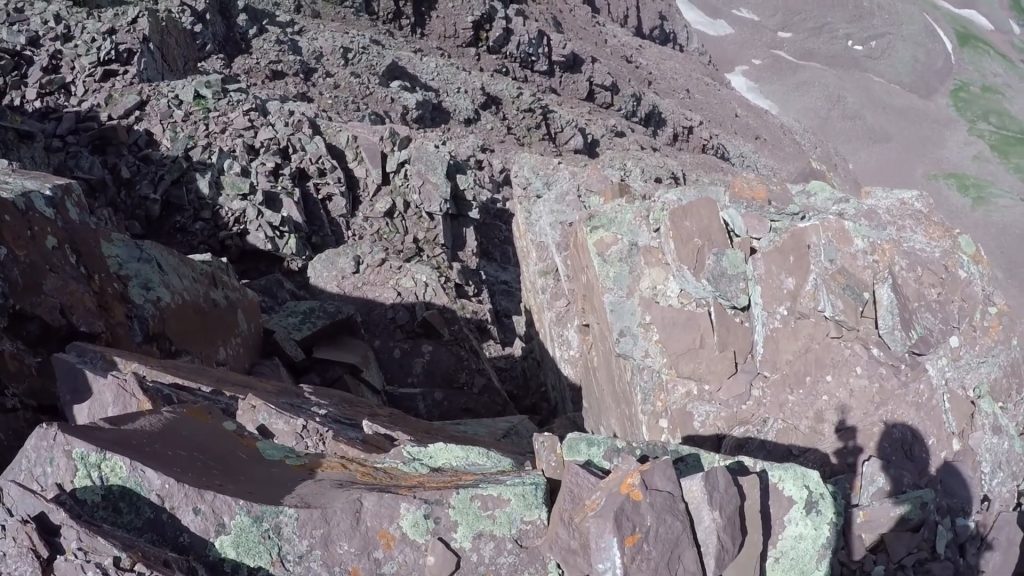
From North Maroon Peak, follow the trail down steep loose rock which is fairly easy to follow. Here, the crux of the route is a class 4 downclimb marked by two rocks leaning on each other above it. These moves can feel extremely awkward. Continue down to eventually reach a series of extremely steep ledges. These must be treated very carefully as the rock is loose and there are plenty of class 3 and some class 4 moves. Eventually you will reach the end of this gully around 12,900ft. Find a narrow path that leads around a cliff band and enters another gully.
Descend 600ft down class 2 terrain and around 11,950ft, find another narrow trail to get around a second cliff band. From here the terrain eases and route finding becomes less difficult to slowly work down a series of talus and boulder fields and then through some trees to rejoin the Maroon Snowmass trail. Take this back to Crater Lake and retrace your steps back to the trailhead. You have completed the Maroon Bells Traverse!
Plan Your Hike
Best Season: The Maroon Bells Traverse is best hiked from June – September as this is typically when the road to Maroon Lake is open and snow is nearly melted out making your hike much more straightforward. If hiking outside of this period, expect a much longer approach to the trailhead (walking, biking or snowmobiling the road closure) and snow on the route which is absolutely not recommended.
Check Weather: Maroon Bells Traverse Weather
Camping: The Maroon Bells Traverse has a few different areas to camp but the most popular and convenient would be a spot at Crater Lake. Another option would be a spot in the Maroon Zone, past Crater Lake. Either way, both spots require a permit and reservation year round. Read more information about that process here.
Bathrooms: There are plenty of restrooms at the trailhead but after that, please bury or pack out your waste.
Hazards: Route Finding, Loose Rock, Exposure, Lightning, Rockfall, Weather Exposure, Water Crossing
Dog Description: If you are considering bringing a dog on the Maroon Bells Traverse, close this guide, call animal protection and surrender your pup. There is no planet where its a good idea to bring a dog on this hike.
Water Sources: There are fairly consistent water sources on the hike up to Maroon Peak and down North Maroon Peak but no places to fill on the traverse. Pack plenty of liquids and calories for this traverse as it will probably take a lot longer than you expect.
Drones: Drones are not allowed anywhere on the Maroon Bells Traverse as the entire hike is in a Wilderness Area. Please always follow all drone regulations.
Hike Tip(s):
Route Finding: Route finding is one of the major keys in a successful Maroon Bells scramble. The hike up Maroon Peak is very straightforward, but once on the traverse, the route can be extremely hard to find with numerous options in many sections. There is a key difficulty towards the end of the traverse where hikers must choose between two class 5 moves. The left feels more protected but is actually extremely exposed and the right is a bit more difficult but less exposed. Once across the Maroon Bells Traverse the route finding does not end. The hike down North Maroon Peak requires a lot of attention and careful route finding, especially if you have not been up its summit before.
Test All Holds: The Elk Mountains in Colorado are notorious for their awful rock quality. The traverse from Maroon Peak to North Maroon Peak should be treated somewhat like walking on eggshells. Test all holds before committing your weight to them. It’s recommended to push rock while testing it vs pulling it.
Avoiding the Reservation: To avoid a reservation for the Maroon Bells Traverse, get dropped off at the Maroon Lake trailhead with a bike and bike back into town, since the ride down to Aspen is mostly downhill and a climbing helmet doubles as a bike helmet. Biking to the trailhead does require a $5 fee but reservations do not sell out.
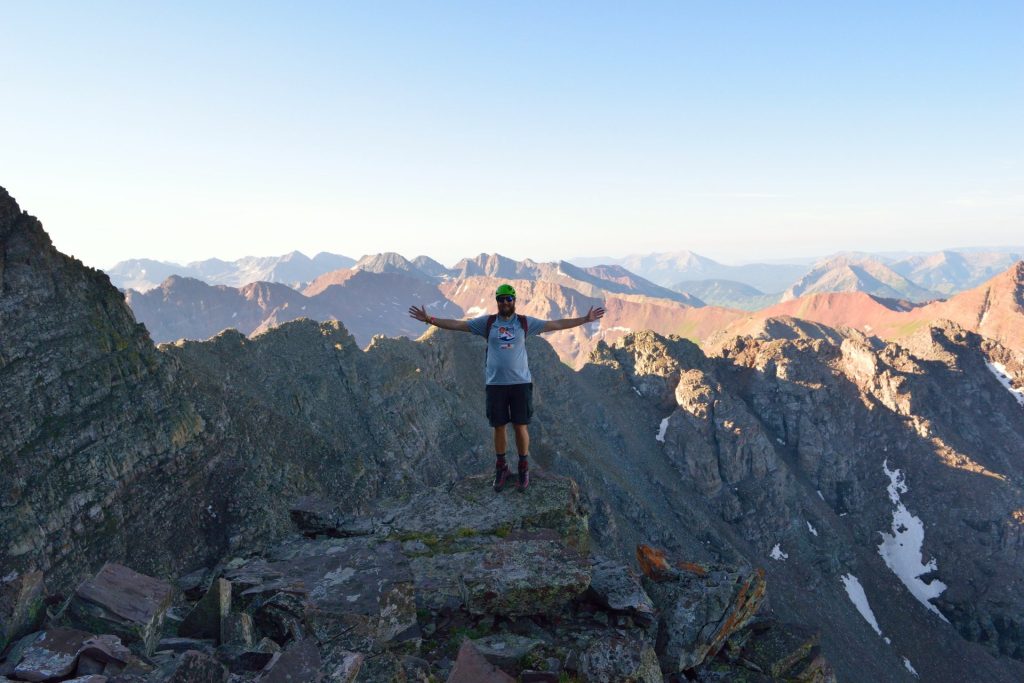
Best Views: The Maroon Bells Traverse is packed with amazing views. From the start of the hike at an iconic lake to the stunning views of the Elk Range and alpine lakes below from the traverse and both summits, the views on this hike are some of the best you will find on any hike in Colorado. Bonus points if you are hiking while the wildflowers are in bloom or when the leaves are turning for fall foliage.
Primary Attractions: Summit Views, Alpine Lake, Ridgeline, Wildflowers, Fall Colors, Solitude
Gear Needed
New to 14ers? This is What to pack for a 14er day hike.
Required Gear
- Hoka Mafate 5 – My go to hiking shoes and trail runners
- La Sportiva Cyklon – Great for scrambling
- Osprey Talon 22 Backpack
- Sunglasses
- Running Hat
- Base Layers
- T Shirt
- Mid Layer / Sun Hoodie
- Rain Jacket / Shell – Black Diamond
- Mountain Hardwear Puffy Jacket
- REI Sahara Pants
- North Face Wander Shorts
- Socks
- Hiking Poles – 120CM
Seasonal Gear
Optional Gear
- Helmet
- Water Filter
- Garmin inReach
- Headlamp
- Garmin Fenix Watch
- UD Running Vest
- Osprey Running Vest
- Film Gear: GoPro, Joby Tripod, Selfie Stick, GoPro Max 2 , Drone, Insta360
- *Links included in this description might be affiliate links. If you purchase a product or service with the links that I provide I may receive a small commission. There is no additional charge to you.
3 thoughts on “Maroon Bells Traverse Colorado 14er Hike Guide”
Mick! This site and your youtube channel are awesome! What a resource…thank you! Though I must say, for those (like me) not at your level of hiking/climbing, if you say it’s hard then it’s really, REALLY hard (like maybe I’m not ready for it hard).
I’ve summitted Longs, Crestone Needle and Pyramid. I’d like to try the Maroon Bells traverse, but may have to try South Maroon first, then some day try North Maroon. I also would love to do Capital some day.
I live in the DC metro area so I only get out to CO for hiking once a year (Labor Day weekend usually). Based on my three summits, what would you recommend I try next?
Thanks again for putting all this awesome content out here for us!
Hey man, thanks so much for the feedback I really appreciate. Totally understand your comment about skill levels, I tried to explain my grading system in the “what does this mean” after each difficulty level, but ultimately its different for each individual. It sounds like you are leaning towards 14ers, so I would take a look at: Sneffels, the sawtooth on Mt Evans/Bierstadt, Wetterhorn Peak or if you want a bigger trip, check out my series on the Chicago Basin. Outside of 14ers, check out my hike on the fly that’s a really nice scramble as well. I will continue to add a ton of stuff this summer and thanks again for reading!
Hey Mick, thanks so much for all your hard work and putting everything together. You’re vids and this site are an invaluable resource. I am planning on doing this solo this summer, and the traverse makes me the most concern, especially given the difficulties with route finding. How early did you leave (I think I’m roughly you’re speed) and what time where you doing the traverse roughly? Also is this a fairly busy route? I would feel more comfortable if there was other groups up there. Thanks so much!