
Colorado 14er Packing List: Essential Gear for Every Hiker
Wondering what to pack for a Colorado 14er hike? After hiking all 58 Colorado 14ers and standing on more than 140 total 14er summits over the past decade, I’ve learned exactly which items are worth carrying and which ones can stay at home.
Whether you’re hiking your first Colorado 14er or working toward finishing all 58, having the right gear can make the difference between an enjoyable day in the mountains and turning around early due to weather, cold temperatures, altitude issues or equipment failures. This Colorado 14er packing list covers everything I bring on a typical day hike, including clothing, food and water, navigation tools, emergency equipment and seasonal gear recommendations.
Frequently Asked Questions About Colorado 14er Packing Lists
What should I pack for my first Colorado 14er?
Every Colorado 14er packing list should include water, food, comfortable trail runners or hiking shoes/boots, layers (base layer, short sleeve shirt, long sleeve layer- even in summer months), a rain jacket, hat and gloves (even in summer months), navigation tools (map downloaded to phone, hard copy of map), a headlamp, sun protection and basic emergency equipment. Some routes will require more gear than this but this is a great place to start.
How much water should I bring on a Colorado 14er?
For most summer Colorado 14er hikes, I recommend carrying at least 1-3 liters of water depending on the route, weather and your personal needs. Longer routes and hot summer days often require additional water or the ability to filter and refill your water as you go.
How Much Food Should I Bring on a Colorado 14er?
My general rule of thumb is to bring 100-200 calories for every hour you expect to be hiking, plus an additional 200 calories in case the day takes longer than planned. All of my guides have an anticipated time to complete on them and I would budget more time on your first few 14ers until you get a better idea of your hiking pace on them. I recommend sites like The Feed where you can try out high calorie, easy to carry fuel options.
Do I need hiking poles for a Colorado 14er?
Hiking poles are optional but highly recommended. They help reduce stress on your knees during long descents, improve stability on loose terrain and help to make your climbing more efficient and quickly. TRUST ME, I hated the idea of hiking poles when I started hiking the 14ers but now that I can efficiently use them, they are a piece of gear I rarely leave the house without.
What clothing should I wear on a Colorado 14er?
Avoid cotton whenever possible. Why? “Cotton Kills.” Once cotton gets wet, it is extremely hard to dry and it gets heavy which can be dangerous in a survival situation. Plus, its usually not the most comfortable or most durable and chafes easily. Synthetic or wool base layers, a mid-layer, a waterproof rain jacket, not just a water resistant shell and additional warm layers are ideal since Colorado mountain weather can change quickly. I also always carry a beanie and at least a light pair of gloves, even in summer months to keep my hands warm. They both weigh nothing, take almost no space and can save your digits if things get colder than you were anticipating.
Trail Runners vs Hiking Boots – What is best for a Colorado 14er?
Like thousands of other hikers, I started my Colorado 14er journey in hiking boots. However, once I switched to trail runners, I never looked back. Ultimately, its up to the individual and you need to find something for your feet that is the most comfortable over hours and hours of time. Goretex boots or shoes are highly recommended but not always necessary. I am team trail runner until I die and only wear boots now when high levels are snow are involved in my 14er hike.
Do I Need a Helmet for a Colorado 14er?
Many Colorado 14ers do not require a helmet when hiking standard routes. However, helmets are strongly recommended for routes involving Class 3 scrambling or above and those with long sections of loose terrain above you. Peaks such as Capitol Peak, Little Bear Peak, Pyramid Peak and the Maroon Bells are examples where I typically carry a helmet. Learn more about the YDS Class System here.
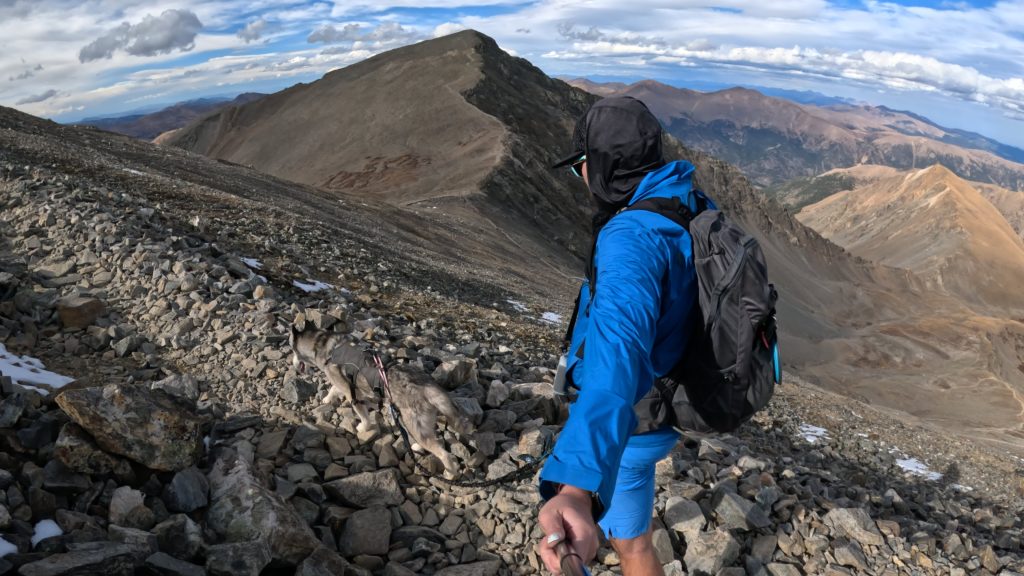
Day Hike Colorado 14er Packing List
After hiking all 58 Colorado 14ers and standing on more than 140 total 14er summits, this is the exact gear I pack for most summer Colorado 14er hikes.
Backpack or Vest
The exact gear you carry will vary depending on the season, route and weather, but every Colorado 14er starts with a properly sized backpack. For most summer day hikes, a pack or vest in the 20-30L range provides enough room for food, water, layers and emergency gear. Winter ascents and longer routes often require additional space.
Personally I use either a UD Running Vest, Larger Osprey Vest or Osprey Backpack.
Clothing & Layers
If there is one area where hikers consistently make mistakes, it’s clothing. Colorado mountain weather can change rapidly and temperatures can vary by 30-40°F from the trailhead to the summit. Avoid cotton whenever possible. Once cotton becomes wet, it dries slowly, loses insulating properties and can contribute to hypothermia in the wrong conditions. Instead, build your Colorado 14er clothing system around synthetic or wool layers. I also always pack gloves and hat, even in summer months.
Base Layer
- Synthetic or wool shirt
- Non-cotton socks
- Hiking pants or shorts
- Moisture-wicking base layers
Mid Layer
- Sun Hoodie or long sleeve
- Light fleece – optional if you run cold or not
Outer Layer
- Rain Jacket / Shell – make sure its water proof, not resistant
- Puffy Jacket
- Wind-resistant shell (seasonal)
Always Bring
- Hat
- Lightweight gloves
Food & Water
Food and water are often overlooked until something goes wrong. For most summer Colorado 14ers, I recommend carrying 1-3 liters of water, depending on route length, weather and personal needs. Larger objectives may require additional water or a water filter with water sources to refill.
When it comes to food, I focus on calories, convenience and enjoyment. Sure, performance nutrition matters, but sometimes the mental boost of your favorite snack is just as important as its nutritional value. Personally, Sour Patch Kids and a salty snack are staples in my pack.
A simple rule: Bring more food and water than you think you’ll need.
Unexpected weather, slower hiking partners, route-finding issues or altitude can all turn a quick outing into an all-day adventure.
Navigation
Many Colorado 14ers follow obvious trails, but navigation mistakes still happen every year. Every hiker should carry at least one reliable navigation method and know how to use it before heading into the mountains. Technology can fail, batteries die and weather can reduce visibility. Redundancy is your friend.
Recommended Navigation Tools
- GPS watch – I use the Garmin Fenix series
- Satellite communicator: Garmin inReach / ability to use satellite messaging on your phone
- Offline maps on your phone
- Paper map
- Compass
First Aid Kit
Your first aid kit doesn’t need to be large or heavy, but it should be capable of handling common problems encountered on a Colorado 14er. A lightweight kit stored inside a zip-top bag is often all that’s needed.
Items I typically carry include:
- Ibuprofen
- Antacid
- Bandages
- Gauze
- Hand sanitizer
- Blister treatment
- Water purification tablets
- Medical tape
Light Sources
Many Colorado 14ers require alpine starts, meaning you’re likely hiking before sunrise and there is no worse spot that being in the dark after the sun sets. A light source is not optional.
Recommended
- Headlamp
- Flashlight (backup)
- Phone light (emergency only)
Sun Protection
One of the most underestimated challenges on a Colorado 14er is sun exposure. Most routes spend hours above treeline where there is little to no shade and UV exposure is significantly higher than at lower elevations. You need to protect your skin and eyes from these prolonged levels of sun exposure. I have been burned from the sun far too many times than I care to admit.
Must-Have Sun Protection
- Sunglasses
- Sunscreen
- Hat
Optional
- UV Buff – can be used in cold weather situations as well
- Sun hoodie – easy to combine as your mid layer
- Chapstick
Emergency Gear
I spend a lot of time hiking solo and believe every hiker should be prepared to spend an unexpected night outside if circumstances require it. Ideally, these items are never used, but when you need them, you’ll be very happy they’re in your pack.
My emergency kit typically includes:
- Knife or multitool
- Fire starter
- Cordage
- Emergency bivvy or emergency blanket
- Whistle
- Signal mirror
- Toilet paper / waste bag (dog bags work great)
Optional Gear
After hiking all 58 Colorado 14ers and more than 140 total 14er summits, I’ve found that these items aren’t always necessary, but often make the day significantly more enjoyable.
- Hiking poles – get the right size for you.
- Headphones (please don’t use speakers)
- Climbing Helmet
- Camera equipment – my current list: GoPro, Joby Tripod, Selfie Stick, GoPro Max 2, Drone, Insta360
- Waterproof stuff sacks
- Water filter – the easiest way to cut weight in your bag if you can refill water.
- Bug net or spray- only really needed in July / early August
- Backpack (winter) – Seasonal
- Gloves – Seasonal
- Microspikes – Seasonal
- Gaiters – Seasonal
- Snowshoes – Seasonal
- Skis or Splitboard – completely optional but fun!
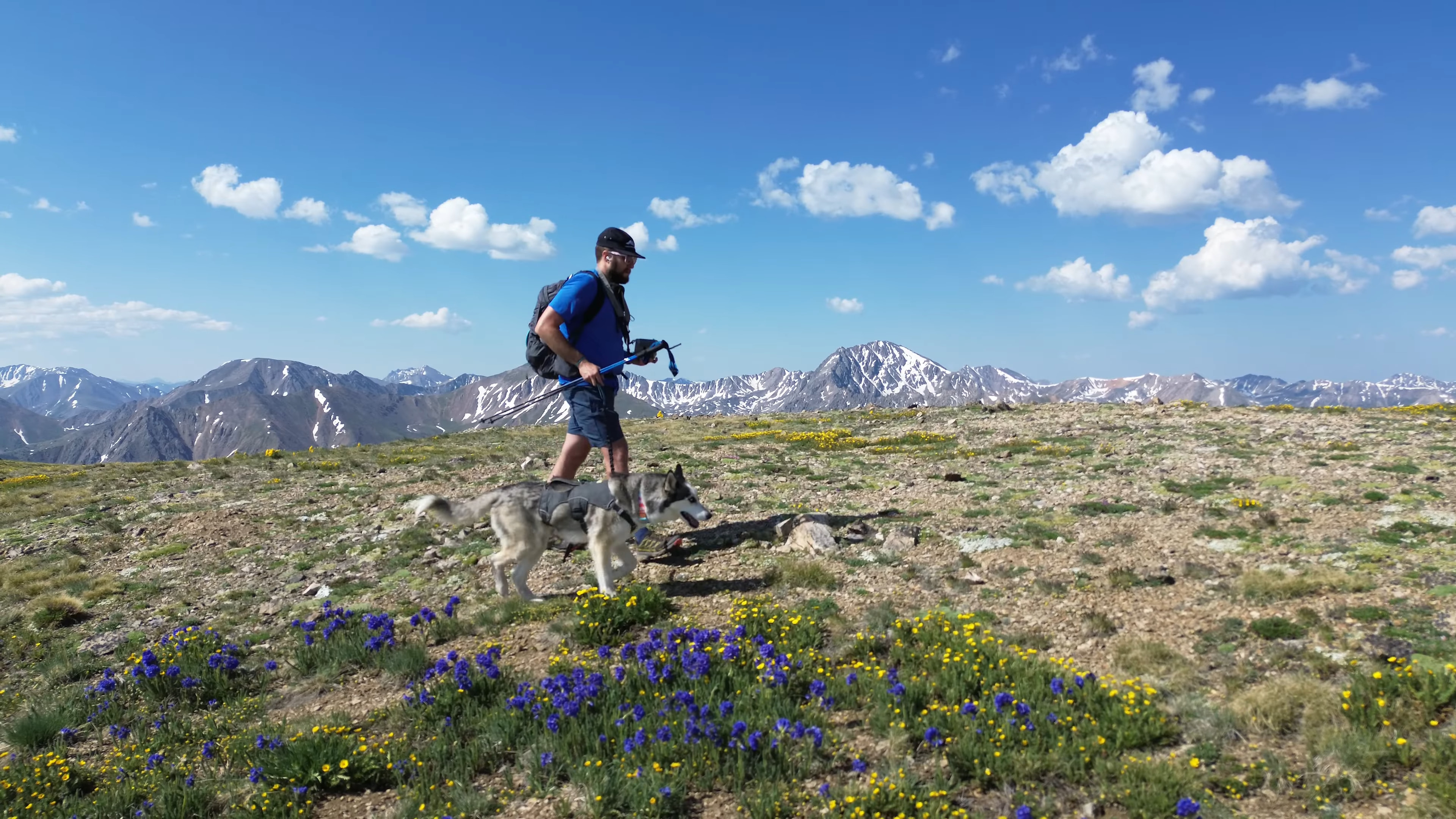
What to Pack for Dog on Colorado 14er
After hiking all 58 Colorado 14ers and completing more than 20 of them with my dogs, they do require some additional gear as well. Check out my list of dog friendly Colorado 14ers here.
Required:
- Harness – a typical collar is not useful in situations where you may need to help carry your dog or hoist them up.
- ID/Airtag: Helpful for someone to ID your dog. I avoid metal printed ones as they tend to rub off over time.
- Poop Bags
- Portable Dog Bowl(s)
- Snacks and Water For your Dog (I typically bring at least 32oz or a Nalgene for Aria)
Strongly Recommended:
- Waist Leash – Any hikes in Wilderness Areas, your dog should be leashed
- Paw Boots
- Paw Balm
- GPS Tracker: Be very careful with which one you buy. Ensure it works without cell service and does not have a small maximum range. If your dog gets away, they will likely not be following any rules…
Emergency Gear:
- Emergency Carry – Optional, but I have had to carry Aria without one and it’s NO fun.
- Basic First Aid Supplies – Can just add some extra things to your first aid kit
Colorado 14er Packing Checklist
Use this quick Colorado 14er packing list as a final check before heading out the door. Most hikers will not need every item listed below, but these are the items I most commonly carry after hiking all 58 Colorado 14ers and logging more than 140 total 14er summits.
Essential Items
- ☐ Running Vest, Hiking Vest or Backpack
- ☐ Water (1-3 liters minimum)
- ☐ Food and snacks
- ☐ Synthetic or wool shirt
- ☐ Moisture-wicking base layers
- ☐ Non-cotton socks
- ☐ Hiking pants or shorts
- ☐ Sun Hoodie or long sleeve layer
- ☐ Waterproof Rain Jacket / Shell
- ☐ Puffy Jacket
- ☐ Hat
- ☐ Lightweight gloves
- ☐ Sunglasses
- ☐ Sunscreen
- ☐ GPS watch or navigation device
- ☐ Offline map downloaded to phone
- ☐ Garmin inReach or satellite messaging device
- ☐ Paper map (recommended)
- ☐ Compass
- ☐ First aid kit
- ☐ Headlamp
- ☐ Emergency bivvy or emergency blanket
- ☐ Fire starter
- ☐ Knife or multitool
- ☐ Whistle
- ☐ Toilet paper / waste bag
Optional Items
- ☐ Hiking Poles
- ☐ Climbing Helmet
- ☐ Water Filter
- ☐ UV Buff
- ☐ Chapstick
- ☐ Headphones (not speakers)
- ☐ Waterproof stuff sacks
- ☐ Camera equipment
- ☐ Bug net or bug spray
Seasonal Items
- ☐ Heavier Gloves
- ☐ Microspikes
- ☐ Winter Backpack
- ☐ Gaiters
- ☐ Snowshoes
- ☐ Skis or Splitboard
28 thoughts on “Colorado 14er Packing List: Essential Gear for Every Hiker”
List seems pretty solid! I’ll add two suggestions for consideration: I hate having to stop to get and open a water bottle/nalgene so a water bladder is my essential so I can stay on the move (especially if I’m using hiking poles). I use a 3L Camelback and sometimes carry a reserve bottle for replenishment on the all-day hikes. I like to drink a lot at altitude! Also, I never leave home without a small roll of duct tape. You never know when a redneck repair may be needed (broken sunglasses, poles, straps,etc) or a worst case scenario where a splint is needed or major blister or contusion has occurred. Happy trails!
Love the feedback, both are great ideas.
My wife and I have done 12 14ers. All in the summer. We’re looking to do our first winter 14er next month. We are going to skin up Quandary Peak. Any recommendations?
Quandary is a fun one in the winter, especially if you are bringing the skis to descend. Be sure to check avi conditions as there is a lot of higher prone terrain, mostly away from the main bowls but still possible to find yourself in that terrain. For the skin up, plan on a very hardpacked trail as its well traveled. Assuming you have multiple layers since you already skin, but wind is a real big factor on Quandary in the winter so just make sure its to your tolerance. Fun one though, enjoy!